
Nov 8, 2018
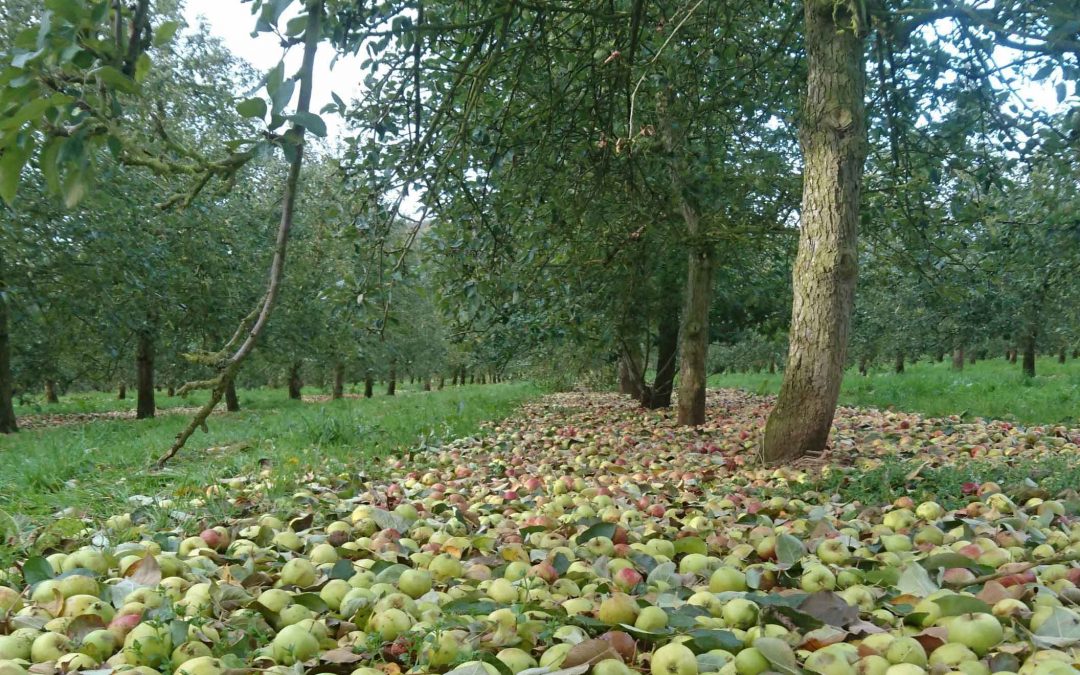
An innovative community cider press run by national charity, The Orchard Project, is on track to hit its target of rescuing 20 tonnes of waste fruit and turning it into scrumptious cider and juice by the end of the year. The neglected, surplus fruit is donated and collected from London’s gardens, orchards and parks where it would otherwise be left to rot, making the cider a unique London brew; 100% local with no air miles and a very minimal carbon footprint. Its consumers can also feel good about supporting a food waste reduction initiative, while enjoying a different taste with every harvest (the varieties of apples used in each batch vary depending on which fruit is donated). The project has even started to source its fruit from commercial supply chains and hopes to explore this avenue further, – a win-win for conscious businesses and cider fans alike!
An army of dedicated volunteers powers the Community Cider Hub under the direction of two part-time female cider makers from The Orchard Project. Nearly 700 volunteers have been trained in harvesting, pressing and bottling the since its inception in 2016, making this a true community effort. The charity ensures that each person leaves with an increased awareness of food waste issues and a free bottle of Local Fox Cider of course. Every part of the process, from scratting and pressing to bottling and labelling, is conducted handcrafted, using traditional methods to preserve our cider heritage.
- Over 15 tonnes of fruit transformed into beverages since 2016.
- Approximately 15,000 bottles of cider and juice produced since 2016.
- Individuals and community orchards who donate fruit are given cider, tools or training on fruit tree care in return.
While this unique, food waste-reducing craft cider movement continues to bloom, its funding is sadly coming to an end. The Orchard Project has launched a Crowdfunding campaign to save the Community Cider Hub and ensure it continues to thrive and grow. The campaign is live from 7th November until 10th December 2018. With a target of £17,500 to raise, the charity is urging people to spread the word and support the campaign at www.crowdfunder.co.uk/localfox. Those who pledge can bag some exciting rewards, from cider gift boxes and signed cider books, to fruit tree pruning and grafting workshops and exclusive artwork.
How our volunteers and supporters benefit:
“Picking and collecting apples with my children: Lovely to participate in a community activity involving various generations rather than just adults.” (Marie, volunteering at a harvesting day)
“It’s a great idea! I wanted to come and help at the cider press since last year; I’ve enjoyed learning about fruit trees and what we can do with them” (Ruth, at a volunteer at a pressing day)
“It’s transforming how we see food waste and finding value out of what others see as a problem” (Arthur, London chef who supports the project)
Oct 29, 2018
We are very grateful that the Chancellor has announced that cider duty will again be frozen in today’s Budget. UK cider makers are under tremendous pressure and whilst we had asked for a reduction in duty, we are pleased that he has listened to our concerns and ensured that the current level of decline does not deteriorate further. The new duty rate for the mid-strength duty band, for ciders between 6.9% and 7.5% ABV of £50.71, introduced from 1st February 2019, will result in an increase of more than 10p per litre bottle. An increase that will impact a large number of cider makers across the UK of all sizes and something that they are disappointed about. Gordon Johncox, chair of the National Association of Cider Makers commented “Great British ciders are a part of rural tradition in many parts of the UK and by freezing cider duty today, the Chancellor has given support to our great industry. Whilst the Chancellor has been very fair in freezing cider duty, we are still concerned for those cider makers inadvertently impacted by the new mid-strength duty band.”

Oct 26, 2018
Thatchers Cider has won a national award, the prestigious “IGD Award for Employability”, for its Young Talent Programme. The Thatchers Young Talent Programme is in its first full year and has just seen 17 apprentices and graduates start work with the Somerset-based cidermaker. Thatchers is delivering high-quality, inspirational work experience and development opportunities, preparing people for work in this world-class industry. IGD is a national research and training charity at the heart of the food and grocery industry.
Martin Thatcher, fourth generation cidermaker at Thatchers says, “It is a real honour to be recognised by IGD with this award for our Young Talent Programme. Over recent years we have found that knowledge about careers within the food and drink sector hasn’t met our needs as an emerging business, so we wanted to create our own apprenticeship programme to attract the best people and invest in training and development.”
Emma Cox, training coordinator at Thatchers adds, “We started from a blank sheet of paper, and in just twelve months by working with local schools, colleges and universities we have developed and compiled an apprenticeship and graduate programme that is tailored to the needs of our industry, not only helping young people start on their career path, but importantly developing the skilled workforce that as a growing company we need at Thatchers.”
Fiona Miller, Head of Employability and Skills at IGD, said: “Already reaching over 10,000 young people, we were blown away by the results Thatchers is achieving after just 12 months of its Young Talent programme. The Thatchers team has a strong understanding of the education landscape and has developed a long-term strategy and comprehensive programme that puts the needs of young people at its heart. They run engaging activities for school and university students, and work collaboratively with teachers and parents, to empower young people to make informed decisions about their future. It’s great to see that the young talent pipeline is already building as a result, and that they work closely with other business in the region to share best practice.”
[Photo: Martin Thatcher, centre, with Emma Cox, centre left, together with some of the new starters in the Thatchers Young Talent programme]
Oct 22, 2018
With the Autumn Budget just over a week away, the NACM has been talking to MPs to gain support for better treatment for cider.
The new duty band for mid-strength cider will come into effect from 1st February 2019 and the new duty rate for ciders between 6.9% and 7.5% ABV will be announced on 29th October. The increase in excise duty that this brings will negatively impact nearly all cider makers, with the inadvertent consequences felt most by smaller cider makers.
In their submission to the Treasury ahead of the Autumn Budget, the NACM has asked for special consideration to be given to cider. Gordon Johncox, chair of the NACM explains “Cider has been in decline since 2009 and the impacts are being felt across the industry and the cider supply chain. Apple contracts in the South West, Herefordshire and other cider making regions are ending as the cider industry requirement for apples falls.” The standard cider category is now 25% smaller than it was 9 years ago, resulting in fewer apples needed to meet consumer demand. In the same period changes to excise duty have resulted in the tax on cider moving closer to other categories.
“We need a 2p per pint reduction in excise duty for standard cider, which will help return the standard cider category to growth, but also give a much needed boost to the smaller cider makers who are impacted by the new duty band. Most cider makers will make ciders in both the standard and the mid-strength duty band, so this reduction would help soften the blow when the new duty rate comes in next February.” Gordon explains. “The case for more support for small cider makers is growing day by day. We are asking the Treasury to introduce a progressive cider duty that would support small cider makers to grow, innovate and create more jobs. However, we ask that they consider how best this can be achieved whilst continuing to protect the smallest cider makers who currently benefit from the 70Hl duty relief”.
The NACM has explained to the Treasury that the current concerns around post Brexit impacts on the cider industry, continue to create more uncertainty for the industry, especially around export and supply chain issues. Uncertainty about the tax increase that will be announced on 29th October for the new duty band has added to industry uncertainty. Cider makers create rural jobs, invest in their communities and encourage over half a million tourists to visit each year. Gordon concludes “Cider really is a Great British success story and we ask that it is given more support to encourage growth, innovation and success. We hope that we will be raising a glass of cider to the Chancellor next Monday”.

Oct 1, 2018
We are pleased to announce that from September 2018, membership of the association is open to any UK cider maker.
Members agree to the following:
– That they meet the criteria laid out in the associations Members’ Agreement
– That they will abide by the NACM Code of Practice
– That they agree to conform to the Portman Group Code of Practice
Members are expected to:
– Attend 4 Council Meetings per year
– Support NACM activity at APPCG receptions in Westminster
– Provide annual volume data and sign an annual declaration of conformity
– Contribute to and support NACM priorities and objectives
– Support the activity of sub-committees
2018/2019 Membership Fees are:
– £500 per annum for cider makers below 15,000 Hl
– Levy based on annual volume for those above 15,000 Hl
– Membership rates are reviewed annually.
– All members, regardless of size will have one vote at meetings.
If you are interested in joining the NACM, please contact us for further information.
Sep 13, 2018
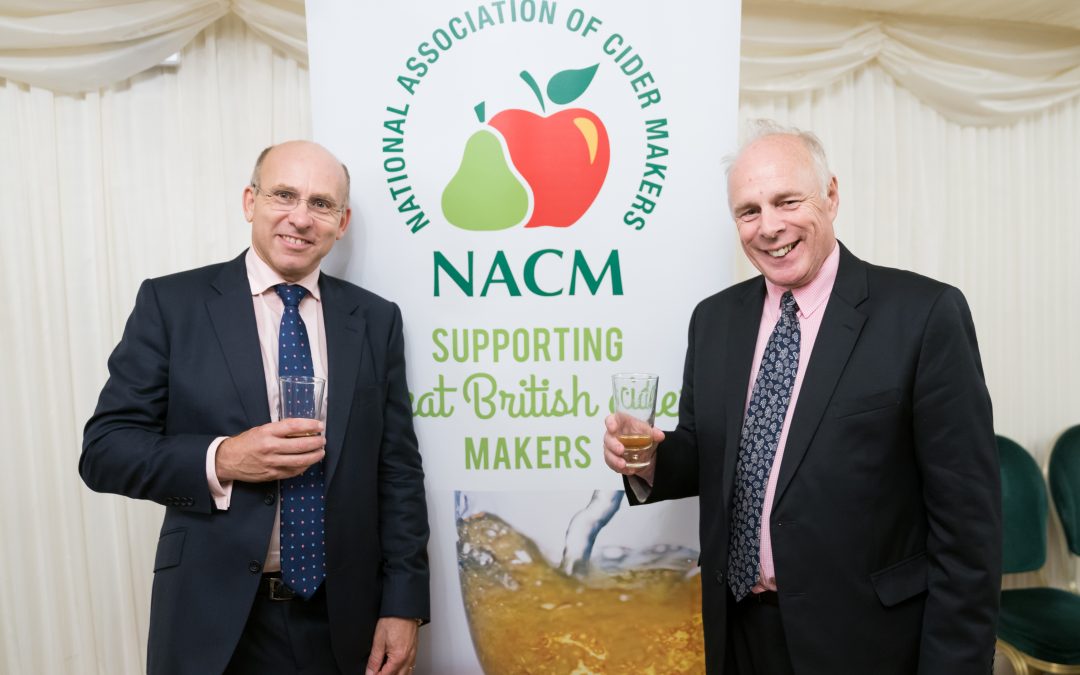
Gordon Johncox, the chief executive of Aston Manor Cider, has been named as the new chair of the National Association of Cider Makers (NACM).
Addressing members of the NACM and attendees at the All Party Parliamentary Cider Group (APPCG) on Tuesday 11 September, Gordon outlined his vision to ensure a sustainable future for producers, whatever their scale.
He called for a fair and balanced regulatory environment for cider makers to operate in and asked for the support from MPs, Ministers and officials to back the UK industry – home to the largest cider market in the world.
Gordon promoted the need for a collaborative approach and all involved to give the industry the best opportunity to flourish.
Speaking about becoming chair, Gordon commented: “I’ve enjoyed a significant amount of my career in the cider industry and a great part of my life living in the cider heartland, so I am relishing the opportunity to lead the industry.
“No matter the size of the cider maker, everyone is committed to apples and agriculture – that is the most important message I want to get across. The industry is facing a number of complex challenges, but through a united approach we can certainly deliver a future that is innovative and sustainable.
“We need an excise duty structure that allows producers to grow, a robust examination of evidence in all policy issues and of course, cider makers to have the common goal to celebrate this diverse industry that provides for ever consumer and occasion – here in the UK and across the world.”
Fenella Tyler, the chief executive of the NACM, spoke about the appointment: “Gordon has been the deputy chair for two years and has already made a significant contribution. We expect he will continue to do great work to advance the interests of all cider markets for the benefit of all cider drinkers.”
Before joining Aston Manor Cider, Gordon was previously the managing director at Magners GB. He will be the chair of the NACM for two years and has replaced Helen Thomas of Westons Cider.


