Vineyard owners are raising a glass to HM Revenue & Customs over new rules that allow them to pass on land where grapes — or apples for cider — are grown, free of inheritance tax.
In an update to its guidance notes on what constitutes agricultural use of land for inheritance tax purposes, the tax office has extended its definition of food to include fruit used to make wines and ciders. This means that the value of the land will be up to 100 per cent tax-free when left in an estate.
Richard Crane, the head of the farms and estates team at BKL, an accountancy firm, says: “This may be seen as a significant extension to tax-planning opportunities because it will become widely known that land for producing wine and cider is eligible for agricultural property relief. The relief is not limited to land within the UK but extends throughout the European Economic Area, which could be an attraction for investors looking to reduce their inheritance tax liabilities while having the pleasure of owning a vineyard.”
BKL says that although only grapes and apples for cider are mentioned specifically by HMRC, a case could be made for other fruit, such as pears used to make perry.
The British wine industry, which primarily produces sparkling white wines, is growing rapidly. It is being boosted by a warming climate that is hitting the wine-growing sweet spot of an average of 14C throughout the April to October growing season, and a higher profile for British products worldwide.
The amount of British land planted with vines has increased 150 per cent in the past ten years and tripled since 2000, according to Wine GB, the national association for the English and Welsh wine industry. Production is predicted to reach 40 million bottles by 2040.
The market in British wines began to take off in 2003 when Nyetimber, which owns vineyards in Sussex, Hampshire and Kent, beat some of the best known champagnes in taste tests. Since then French champagne houses Taittinger and Pommery have invested in British vineyards.
Ed Mansel Lewis, the head of the viticulture group at Strutt & Parker, an estate agency, says: “These two nods of approval have given the UK credibility as a new-world wine- producing region.”
Those keen to invest in the industry should be aware that it takes time for your assets to mature. If you planted your first vines this spring it wouldn’t be until 2023 that your vineyard would have a viable harvest and another two years before you had any wine to sell. The best vineyard land sells for between £13,000 and £15,000 an acre, compared with between £8,000 and £9,000 for arable land. The minimum plot size needed is ten acres.
Simon Robinson, the owner of Hattingley Valley winery and chairman of Wine GB, says he knows of good vine land trading for up to £20,000 an acre and that it can fetch 50 per cent to 75 per cent more than other farm land.
“A lot of vines are being planted in Britain, 2.5 million are expected over the next year. The issue is where are all those grapes going to go?,” Robinson says.
A vineyard owner could sell their grapes to the larger producers for roughly £2,000 a tonne depending on the quality (you can expect about three tonnes of grapes an acre). They could rent out the land, or try to make the wine themselves.
However, with harvests dependent on the weather there is the risk that they could earn nothing in a bad year.
In a good year, like last year, Lewis cautions that commercial wineries were so overloaded with fruit that they turned away grapes from smaller growers. Britain doesn’t have either a network of companies or co-operatives, such as in France, to help small-scale investors process their grapes.
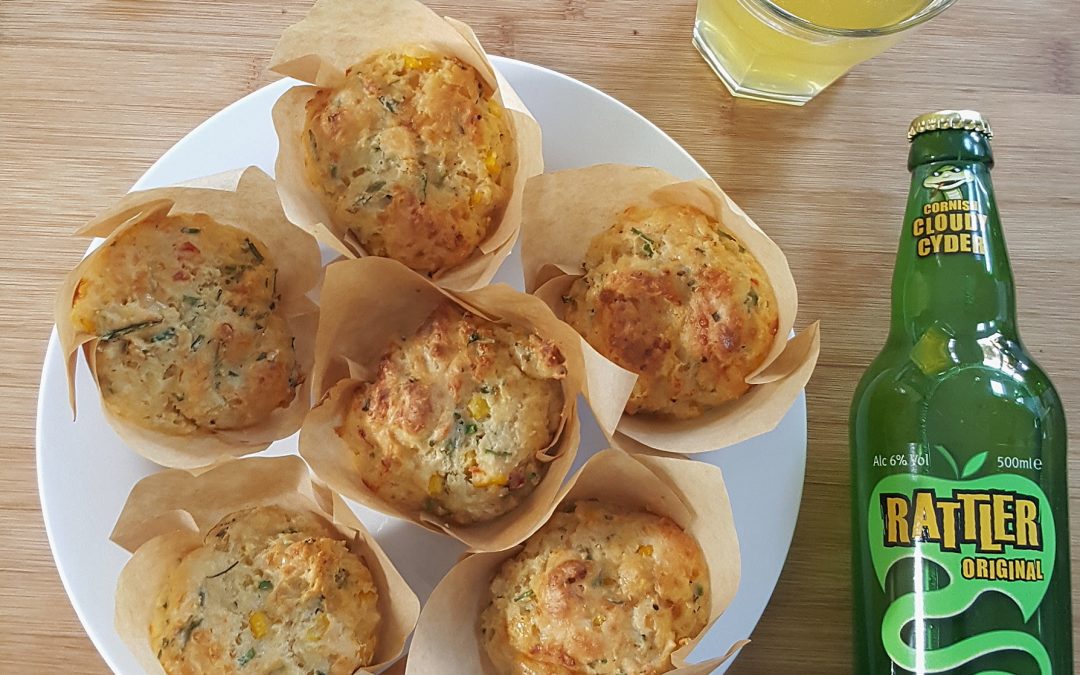
200g chilli cheese, grated (I love M&S Cornish Cove with diablo chilli)
120g tinned sweetcorn, drained
2 medium eggs
225ml sour cream
Recipe is to make 12 muffins.
Preheat the oven to 170ºc, 340ºf, gas mark 4
In a bowl sieve the flour, then add the polenta, salt, bicarbonate of soda and baking powder. Stir gently. Add in the chives, chilli cheese and sweetcorn. Set aside.
In a separate bowl break the eggs and whisk. Add the sour cream and whisk again. Add this to the dry ingredients bowl. Pour the Healey’s Rattler cloudy Cornish cyder into the bowl as well.
Stir until all the ingredients are just incorporated. Do not over stir else the muffins will be dry!
Fill each muffin case with an equal amount of mixture and bake in the oven for 25-30 minutes until golden. Cool for a minute in the muffin tray, then cool on a rack.
These are delicious warm, but also great cold for picnics. They reheat well with a quick 10-20 seconds in the microwave. They also can be frozen!
Click here to watch on youtube. Alternatively, click here to have a look at other recipes by The Fuss Free Foodie involving ciders from our members!
Entitled Race Car and featuring the Thatchers “spokesperson” first introduced in the Somerset cidermaker’s 2017 Hot Air Balloon ad, the commercial follows an unexpectedly slow race car driving through some iconic West Country landmarks.
Expected to be seen over 30 million times in live rugby during the first two months of the campaign alone, and in total seen by ¾ of the adult population, the TV commercial’s message to viewers is that Thatchers is totally uncompromising about the quality of its cider – if something’s not perfect, it’s useless. You wouldn’t settle for a race car that could almost race – so why buy a cider that’s almost perfect, reinforcing the link between quality and perfection of Thatchers.
The 30 second Race Car commercial will be first seen on ITV during the Six Nations Rugby England Vs Ireland match on 2nd February at half time. It will then be shown from February through to September on ITV, Channel 4 and Multichannel, during this year’s top sporting events and TV moments. Hero spots will include Six Nations Rugby, The Grand National, Monaco Grand Prix, Cricket World Cup, Game of Thrones, Great British Bake Off, and the Women’s Football World Cup.
The ad will be included in a VOD (video on demand) campaign running April to July, and also runs in cinema during July and August, including the silver spot in the hotly anticipated new Quentin Tarantino Film – Once Upon A Time in Hollywood, starring amongst others Brad Pitt, Leonardo di Caprio and Margot Robbie.
Yvonne Flannery, Head of Brands at Thatchers Cider comments, “This new phase of our award-winning campaign features our popular Spokesperson, as well as cameos from Martin Thatcher and our chief cidermaker Richard Johnson. Filmed in iconic West Country locations, it retains a gentle, warm-hearted yet funny tone, and leaves the viewer with no doubt as to the taste and quality of Thatchers ciders – what cider’s supposed to taste like.
“Following from our Hot Air Balloon commercial, which we know resonated strongly with viewers on enjoyment and memorability*, Race Car creates a long-term campaign for Thatchers, filmed in the same, sunny photographic style, and featuring familiar faces, music and scenery to support brand recognition.
“Of course, the notion that the race car is going so slow is clearly ridiculous, as was the low flying hot air balloon in the first of the ad series. This is a humorous ad that will appeal to a wide audience and introduce new customers to our brand.”
Joint London are the creative agency behind the campaign for Thatchers, with Bray Leino advising on media buying. The film was directed by Declan Lowney, who has shot numerous commercials for some of the world’s biggest brands. He is also a top television comedy director, with Father Ted, Little Britain and Moone Boy amongst his credits.
The TV campaign is accompanied by a new series of short films for digital channels, also featuring the Thatchers’ Spokesperson, who finds himself in humorous situations at Thatchers Myrtle Farm, always highlighting the Thatchers family of ciders and their great taste characteristics – Thatchers Gold, Haze, Vintage and Katy.
2019 will be another important year for the growth of the Thatchers brand, with planned marketing activity including experiential, sponsorships, events and festivals. The family-run Somerset cidermaker is continually supporting and growing its brands to help drive people into the cider category, and is one of the biggest investors in marketing amongst UK cidermakers.
With its focus on apple cider, Thatchers is driving the apple cider category across both on and off trades with its Gold and Haze ciders. Thatchers Gold is the no 2 canned apple cider (by value)* in the off trade and Thatchers Haze is the No 1 cloudy cider. In the on trade Thatchers Haze is the fastest growing cider in the top ten draught ciders**, and Gold has the best rate of sale of all draught apple ciders.
The commercial was shot in locations including Wells, Shiplate, and Castle Combe.
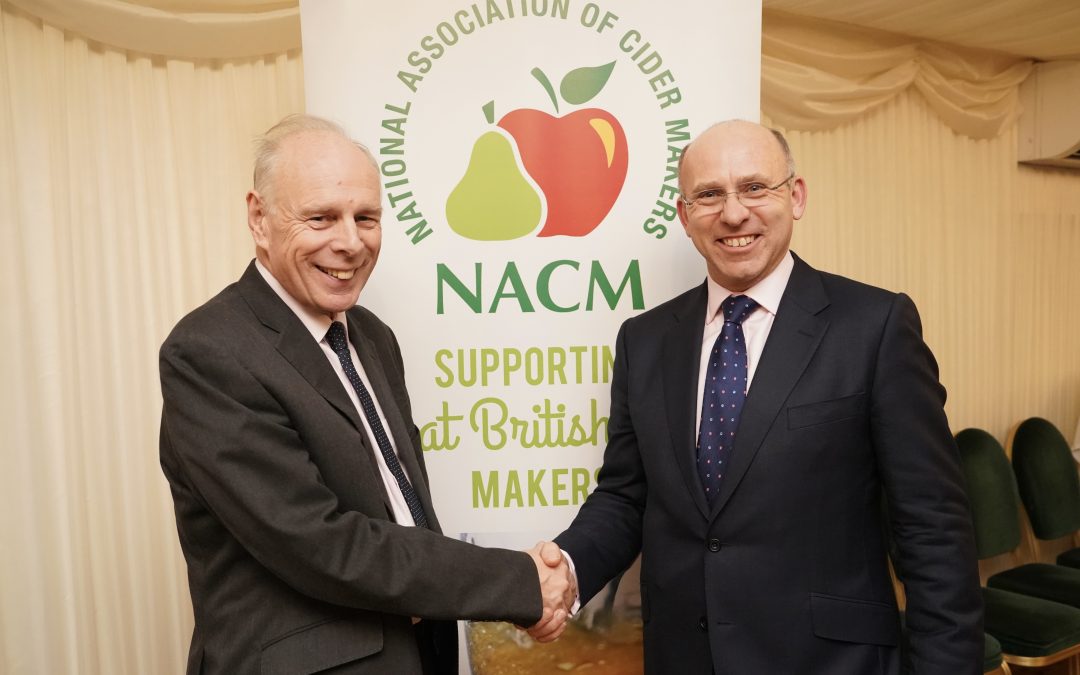
Gordon Johncox, the chair of the National Association of Cider Makers (NACM) and the chief executive of Aston Manor Cider, addressed MPs, government officials and industry figures to outline a British success story in need of support.
Gordon outlined how collaboration across the industry by cider makers of all scales is a positive feature, though the hard-pressed sector still needs support from government.
As a relatively small industry, representing the best interests of every cider maker informs all aspects of activity of the NACM. The vision of the association is that all producers can operate successfully and fairly in a competitive market, whilst continuing to support their communities, employees and apple growers.
To enable this, he called for a balanced regulatory environment for cider makers reflecting the unique circumstances of producers. In particular, MPs, Ministers and officials were urged to deliver a consistent application of regulations.
Gordon challenged the Government’s willingness to understand the specific situations of cider makers. While headlines from the Autumn budget stated that cider duty was frozen, ciders in the middle duty band received a 25% tax increase, impacting many small cider makers.
Following his speech, Gordon commented: “Cider businesses of all sizes are working hard to deliver a sustainable future for the benefit of consumers and the rural environment. The industry is a significant part of British heritage.
“We need the support of politicians to work with us to return cider to more positive results, remove red tape and the unnecessary rules that limit innovation and investment. This support can enable cider makers produce fantastic products that interest in our category.
“We work to see every cider maker flourish and grow in line with their ambitions, whilst maintaining the highest standards. We firmly believe that with our collaborative nature and how we support one another this can be achieved when we can rely on consistent and sensible legislation.
“In recent months we have seen members providing orcharding experts when others experience weather related problems, large companies have supported smaller producers to expand their packaging ranges. When something is challenging or if advice is needed, small producers will always be supported, and to me, this is why the UK cider industry is so very special.”
The Parliamentary Cider Group Reception was an opportunity to showcase the best of British cider, which is home to the largest cider market in the world. The evening was attended by cider makers from across the South West, Midlands and further afield, as well as many MPs that represent cider making regions within their constituencies.
The NACM is the UK cider industry representative body, working on behalf of large and small producers:
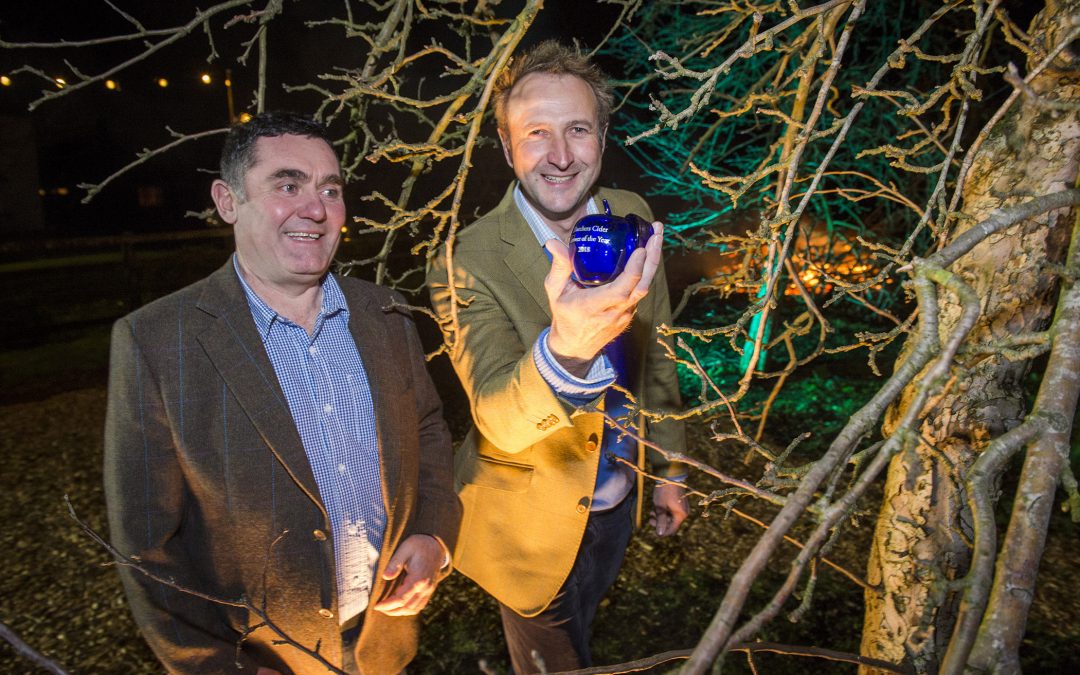
Richard, who has followed in his father’s footsteps in growing and supplying apples to Thatchers, was presented with the Thatchers Apple Grower of the Year award at the cidermaker’s annual Wassail celebrations.
Richard supplies seven different apple varieties to Thatchers, both bittersweet and dessert – from Katy early in the season, through to Yarlington Mill as one of the last to be harvested.
Richard Johnson, chief cidermaker at Thatchers says, “Richard has put in an enormous amount of effort throughout the growing and harvest season to ensure his apples are the highest quality. In fact, this last harvest he supplied us with 101 trailer loads of fruit, which were all fantastic quality from September through to November. That is a real achievement over such a large harvest.
“Richard’s dedication to quality matches our own and truly reflects our ethos that the best cider starts in the orchard.”
Thatchers presents the award each year to recognise the commitment to quality that the growers have demonstrated when supplying fruit into the Thatchers cider mill.
Thatchers has over 500 acres of its own orchard in and around its cider mill at Myrtle Farm in Somerset, as well as a number of growers throughout the West Country.
“Climate and soil – as well as the expertise of the grower – all play their part in producing top quality apples for cidermaking,” continues Richard Johnson. “As a cidermaker we have our favourite apple varieties to suit our own style of ciders – Richard Morgan-Jones supplies us with Katy, which is pressed into our single variety cider of the same name; newer apple varieties such as Gilly and Jane, and much-loved bittersweet varieties Dabinett and Yarlington Mill.
“We test every batch of apples for quality that arrive at Myrtle Farm during harvest and reward our growers accordingly. This year Richard Morgan-Jones excelled, and we are very happy that he’s our Apple Grower of the Year.”
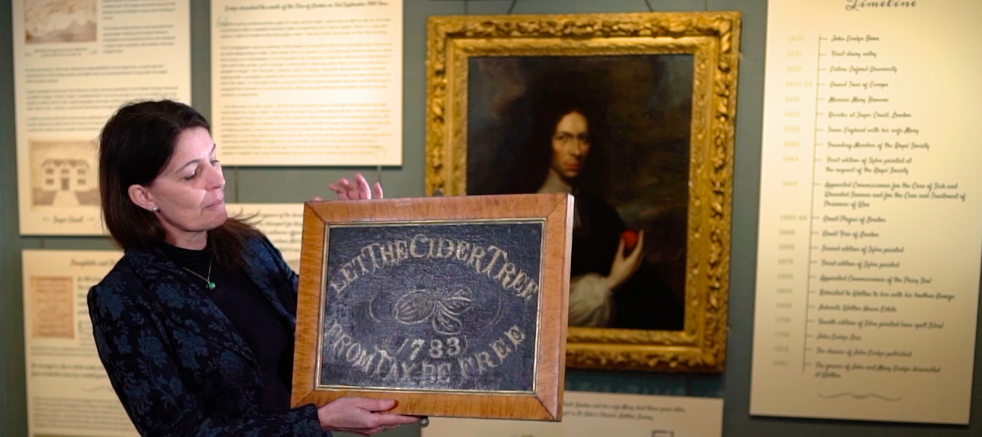
The NACM has been working with the Cider Museum in Hereford to look at some of their wonderful artefacts linked to the history of cider making in the UK. Cider has been enjoyed for hundreds of years and the Cider Museum holds a vast collection of items linked to the past. Our video tells the stories of four parts of their collection, looking at some of the key moments in the history of our favourite drink. With huge thanks to Elizabeth Pimblett, the museum Director, who had the difficult task of selecting just four out of all her favourite parts of the Cider Museum’s collection.