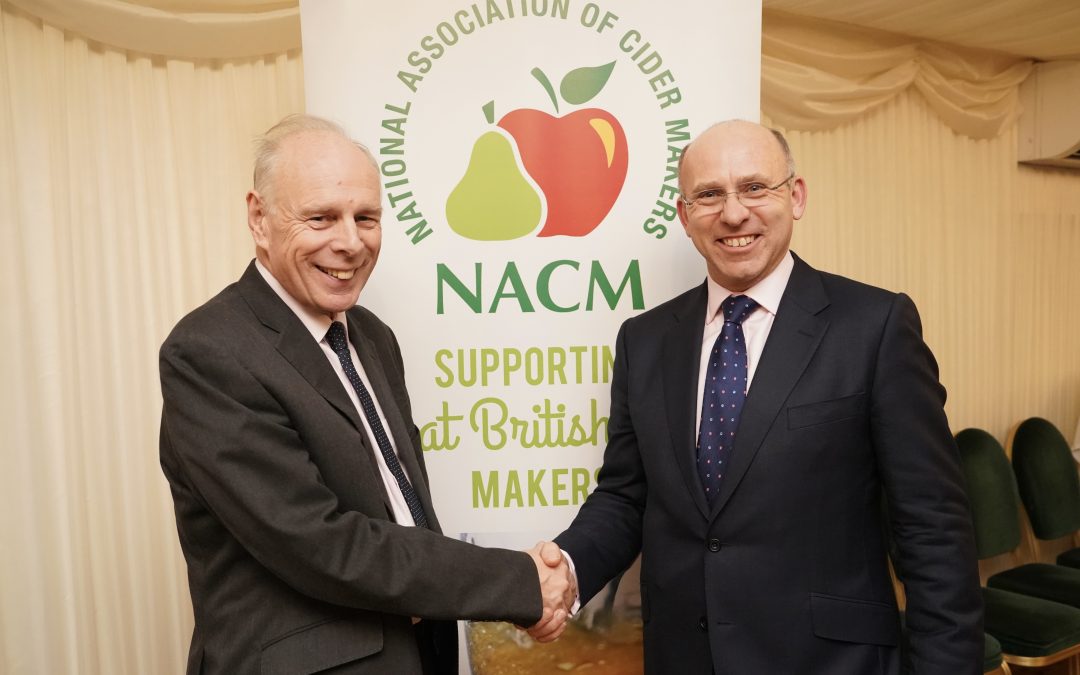
Gordon Johncox, the chair of the National Association of Cider Makers (NACM) and the chief executive of Aston Manor Cider, addressed MPs, government officials and industry figures to outline a British success story in need of support.
Gordon outlined how collaboration across the industry by cider makers of all scales is a positive feature, though the hard-pressed sector still needs support from government.
As a relatively small industry, representing the best interests of every cider maker informs all aspects of activity of the NACM. The vision of the association is that all producers can operate successfully and fairly in a competitive market, whilst continuing to support their communities, employees and apple growers.
To enable this, he called for a balanced regulatory environment for cider makers reflecting the unique circumstances of producers. In particular, MPs, Ministers and officials were urged to deliver a consistent application of regulations.
Gordon challenged the Government’s willingness to understand the specific situations of cider makers. While headlines from the Autumn budget stated that cider duty was frozen, ciders in the middle duty band received a 25% tax increase, impacting many small cider makers.
Following his speech, Gordon commented: “Cider businesses of all sizes are working hard to deliver a sustainable future for the benefit of consumers and the rural environment. The industry is a significant part of British heritage.
“We need the support of politicians to work with us to return cider to more positive results, remove red tape and the unnecessary rules that limit innovation and investment. This support can enable cider makers produce fantastic products that interest in our category.
“We work to see every cider maker flourish and grow in line with their ambitions, whilst maintaining the highest standards. We firmly believe that with our collaborative nature and how we support one another this can be achieved when we can rely on consistent and sensible legislation.
“In recent months we have seen members providing orcharding experts when others experience weather related problems, large companies have supported smaller producers to expand their packaging ranges. When something is challenging or if advice is needed, small producers will always be supported, and to me, this is why the UK cider industry is so very special.”
The Parliamentary Cider Group Reception was an opportunity to showcase the best of British cider, which is home to the largest cider market in the world. The evening was attended by cider makers from across the South West, Midlands and further afield, as well as many MPs that represent cider making regions within their constituencies.
The NACM is the UK cider industry representative body, working on behalf of large and small producers:
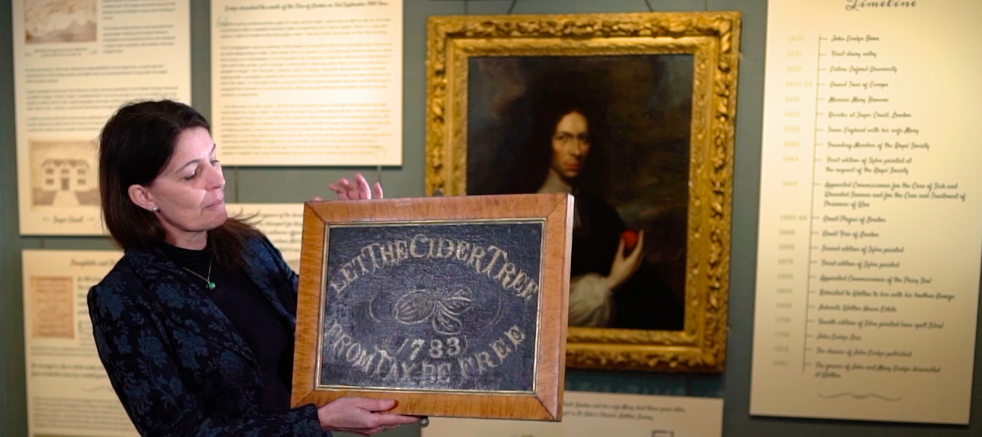
The NACM has been working with the Cider Museum in Hereford to look at some of their wonderful artefacts linked to the history of cider making in the UK. Cider has been enjoyed for hundreds of years and the Cider Museum holds a vast collection of items linked to the past. Our video tells the stories of four parts of their collection, looking at some of the key moments in the history of our favourite drink. With huge thanks to Elizabeth Pimblett, the museum Director, who had the difficult task of selecting just four out of all her favourite parts of the Cider Museum’s collection.
375g eating apples (3), peeled, cored and finely diced
120g dark muscovado sugar
¼ tsp powdered ginger
½ tsp garlic salt
¼ heaped tsp mixed spice
¼ tsp chilli flakes
4-5 rasps of nutmeg
Place all the ingredients in a large pan. Bring to the boil and keep on a medium to high heat for the first 15 minutes. Stir every 5 minutes or so.
Reduce the heat to medium and keep it bubbling away so that it starts to reduce. Keep stirring the relish every 5 minutes.
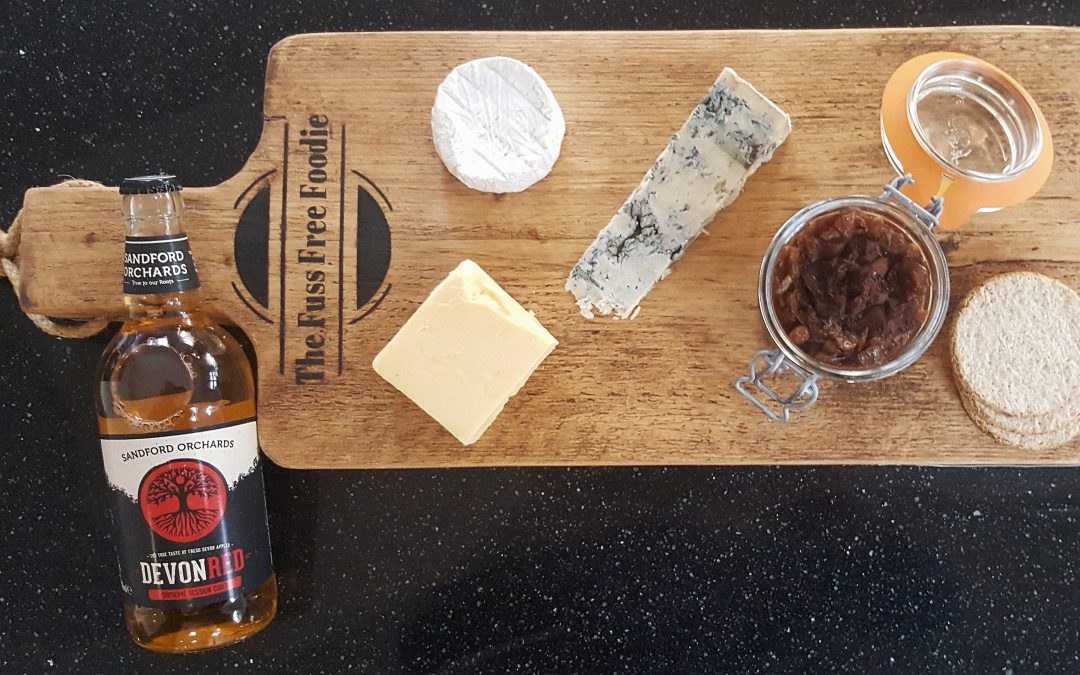
The relish is ready when it goes darker in colour and the liquid evaporates. This should take about 45 -55 minutes. Allow the relish to cool. Serve in a pretty bowl or jar on a cheese board along with your favourite crackers.
Fuss Free tips!
If the relish needs to reduce to a darker colour and there is no liquid left add a splash of hot water. If you wanted to make enough for just one event you could halve the recipe and it will cook in 30 minutes.
If you wanted to store the relish for a longer period, follow your usual preserving methods or sterilize some jars by placing glass jars in an oven for 15 minutes at 150˚C/300˚F/Gas Mark 2 and boiling the lids in water. Place the relish in the jars whilst they are hot and place wax paper over the top.
Click here to watch on youtube. Alternatively, click here to have a look at other recipes by The Fuss Free Foodie involving ciders from our members!
Thanks to the Fuss Free Foodie for her latest creation withMerrydown Vintage!
Serves 3-4
Chowder
85g shallots or onion, finely diced
20g butter
285g potatoes, peeled and diced
200ml veg stock
200ml Merrydown Vintage Original cider
250g mussels, debearded and cleaned
2 corn on the cob, corn sliced off the cob (retain cobs)
250ml whole milk
150ml double cream
200g cod fillet, cut into large chunks
150g haddock tails, cut into large chunks
2 bay leaves
½ tsp salt
¼ tsp white pepper
Crispy cayenne leek garnish
25g leeks, finely sliced
½ tsp cayenne pepper
¼ tsp garlic salt
2 tsp plain flour
4-5 tbsps. oil for frying
Optional Soup thickener
15g plain flour
15g butter
Place the cider and stock into a medium sized pan and bring the liquid to the boil. Add the mussels and cook them on a high heat with the lid on for a few minutes or until all the mussels are open.
Remove the mussels from the pan and set them aside and place the corn cobs into the pan and simmer to extract the flavour.
Meanwhile, add 20g of butter to a large pan and melt on a gentle heat. Add the onion/shallot and sweat for 6-8 minutes until they are translucent and soft. Add the garlic to the pan and cook for a couple of minutes.
Remove the corn cobs from the stock pan and sieve the liquid into the onions. (Do not add the last 2 tablespoons in case gritty from the mussels).
Add in the diced potatoes and bay leaves. Simmer for 5-8 minutes with the lid on until almost cooked and soft to the touch.
Pour in the milk, cream, sweetcorn and season with white pepper and salt. Warm the chowder for 2 minutes.
Take 3-4 ladles of the chowder out of the pan and blitz it with a stick blender or food processer until smooth. This will give your chowder a thick, velvety texture. Be mindful not to blitz the bay leaves! Then add the blended chowder back into the pan and stir and set aside on minimal heat.
Prepare a frying pan with the oil and heat on a medium to high temperature ready to fry the leek garnish. Place the leeks into a bowl and add the flour, cayenne and garlic salt. Rub the leeks into the seasoning and when the oil is hot drop the leeks in to the oil and fry for 3-4 minutes until golden and crispy. It’s best to do this in 2 batches. Set the leeks aside to drain on kitchen roll. Retain the spiced oil for later.
When you are ready to finish the chowder. Bring it back up to a gentle simmer. Check the seasoning at this point and adjust if needed. Remove the bay leaves and add the fish to the chowder. Depending on the thickness of the fish it will only take a short time to cook, just 3 or 4 minutes. Add in the mussels and warm through for a minute.
Ladle the chowder into some warmed bowls. Sprinkle with the leek garnish and a little of the cayenne oil.
Fuss Free Tips!
It’s is best to cook the fish slightly under (looking translucent) as it will cook on in the chowder. It should take a few minutes. It should feel firm to the touch but not hard. Just keep an eye on it!
If you want to prepare this ahead of time, you can, just prep up until stage 8. When you are ready to eat, start again on number 9.
If your chowder is not thick enough, rub together 15g of butter and 15g of plain flour to make almost a dough/paste. Drop little lumps of this into the chowder and it will make it rich and thick.
Feel free to use a can of tinned corn to make life more fuss free!
Click here to watch on youtube. Alternatively, click here to have a look at other recipes by The Fuss Free Foodie involving ciders from our members!
Thatchers Cider has won a national award, the prestigious “IGD Award for Employability”, for its Young Talent Programme. The Thatchers Young Talent Programme is in its first full year and has just seen 17 apprentices and graduates start work with the Somerset-based cidermaker. Thatchers is delivering high-quality, inspirational work experience and development opportunities, preparing people for work in this world-class industry. IGD is a national research and training charity at the heart of the food and grocery industry.
Martin Thatcher, fourth generation cidermaker at Thatchers says, “It is a real honour to be recognised by IGD with this award for our Young Talent Programme. Over recent years we have found that knowledge about careers within the food and drink sector hasn’t met our needs as an emerging business, so we wanted to create our own apprenticeship programme to attract the best people and invest in training and development.”
Emma Cox, training coordinator at Thatchers adds, “We started from a blank sheet of paper, and in just twelve months by working with local schools, colleges and universities we have developed and compiled an apprenticeship and graduate programme that is tailored to the needs of our industry, not only helping young people start on their career path, but importantly developing the skilled workforce that as a growing company we need at Thatchers.”
Fiona Miller, Head of Employability and Skills at IGD, said: “Already reaching over 10,000 young people, we were blown away by the results Thatchers is achieving after just 12 months of its Young Talent programme. The Thatchers team has a strong understanding of the education landscape and has developed a long-term strategy and comprehensive programme that puts the needs of young people at its heart. They run engaging activities for school and university students, and work collaboratively with teachers and parents, to empower young people to make informed decisions about their future. It’s great to see that the young talent pipeline is already building as a result, and that they work closely with other business in the region to share best practice.”
[Photo: Martin Thatcher, centre, with Emma Cox, centre left, together with some of the new starters in the Thatchers Young Talent programme]