Apr 29, 2019
NACM is proud to be working with NIAB-EMR and the other partners to sponsor BBSRC CTP PhD students who are conducting cider apple relevant research as a part of their PhD. Over a series of features we will introduce you to each student and the topic that they are researching. To begin with, we look at an overview of the programme and how it will help to contribute to a secure and sustainable future for cider apple growing. For more information please contact us.

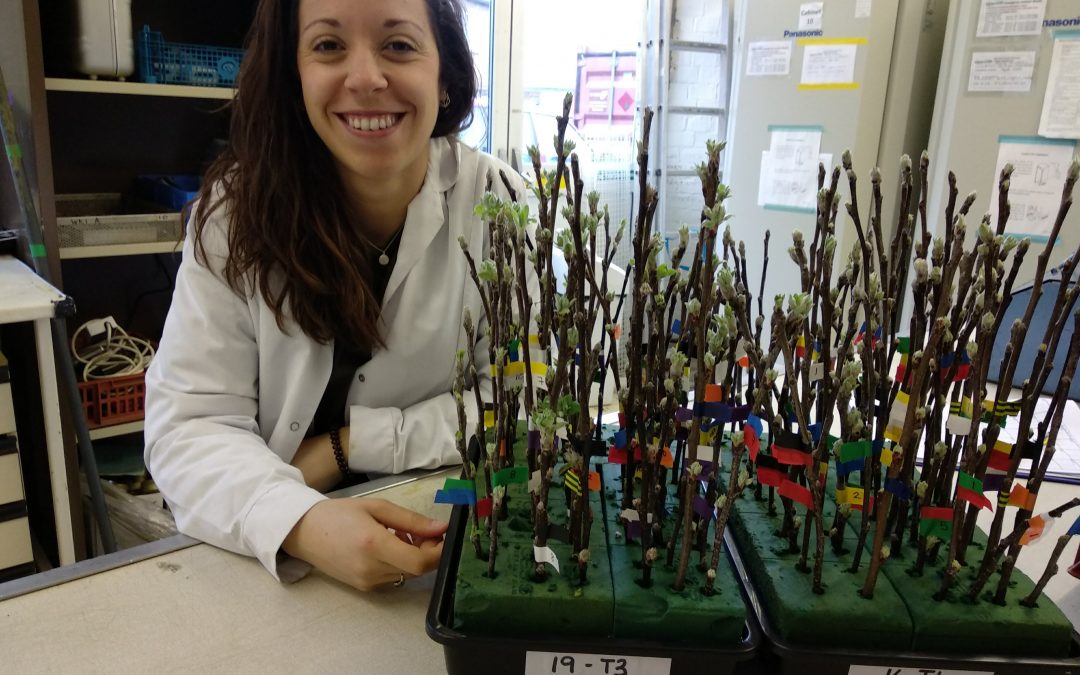
Carlota is doing a PhD with NIAB-EMR and the University of Reading. She studied in Environmental Sciences at the Universitat de Girona (Spain), the region of Spain she is from, and has a Post-Graduate Diploma in Conservation of Biodiversity from the University of Kent. After university, she worked in the forestry sector for two years, focusing on seed dormancy and germination.
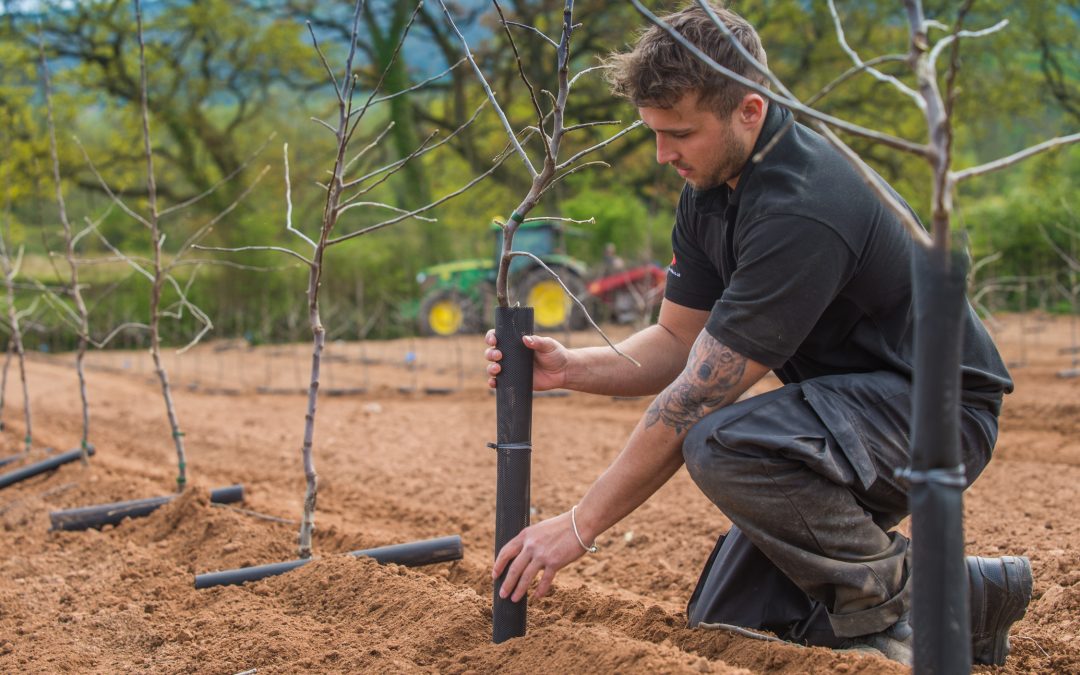
Her PhD is “Understanding the mechanisms of apple dormancy break in the context of climate change”. In the UK, climate change projections predict an increase in temperatures and in the frequency of extreme weather events. For apple production, this translates into a longer growing season with higher chances of frost due to early flowering and a shorter and potentially insufficient chilling period. Insufficient chilling can contribute to the absence or delay of bud break and the production of smaller and abnormal fruits, having a huge impact on apple production. A modelling approach is required to anticipate climate change impacts on dormancy break. The overall goal of this PhD is to develop a new chilling model for apple, which will be used to advice growing ractices and guarantee future apple production in the UK.
Apr 11, 2019
NACM is proud to be working with NIAB-EMR and the other partners to sponsor BBSRC CTP PhD students who are conducting cider apple relevant research as a part of their PhD. Over a series of features we will introduce you to each student and the topic that they are researching. To begin with, we look at an overview of the programme and how it will help to contribute to a secure and sustainable future for cider apple growing. For more information please contact us.
NACM was first approached in 2016 to join in with a multi company approach to funding a PhD research programme focussed around top fruit trees. The FCR-CTP programme started in 2017 and covers not just tree fruit crops but also soft fruit and is the largest research programme of its kind in the UK with topics ranging from the cider apple relevant ones listed below, but also including robotic strawberry picking, managing spotted-wing drosophila in cherries and strawberries and many others. Part of the intention is the interaction between students of different disciples and different years to create synergies in thinking and ultimately application. Each PhD topic is considered for this: e.g. whilst the PhD ion root architecture is focussed on apple rootstocks, the lessons learned will also be applicable to perry pears (and plum, and cherries etc.) The students themselves are from varied background and nationalities and bring fresh pairs of eyes to cider apple research.
The programme started in 2017 and NACM was pleased 3 students selected cider relevant PhD topics. Each year the NACM Pomology Committee is provided with a list of topics that academics and the industry partners have proposed can select ones that would most relevant to cider apple growers. Chosen topics in the first three years are:
- 2017 cohort
- Winter dormancy mechanisms
- Woolly apple aphids, parasitic wasps and climate change
- Root architecture (ref. anchorage, water, nutrient uptake)
- 2018 cohort
- Novel ways of managing tree crop fungal diseases using precision diagnostic technologies to tailor disease management strategies
- Investigating inherent resistance to crown rot in apple (and strawberry)
- Understanding soil resilience to improve tree health
- 2019
- Resistance and susceptibility in interactions between apple and woolly aphids
- How does nutritional status affect plant immunity?
- Carbon sequestration potential of apple rootstocks: the role of root recalcitrance, root exudates, and the rhizosphere microbiome
Each student will spend four years conducting the research and will present a final thesis to support their PhD. During the course of their PhDs the students will complete a number of reports and also typically publish 2-3 academic papers. NACM will maintain a library of these reports, and also encourage the students to present at NACM events such as the annual Growers Walk and Biennial Growers Conference.
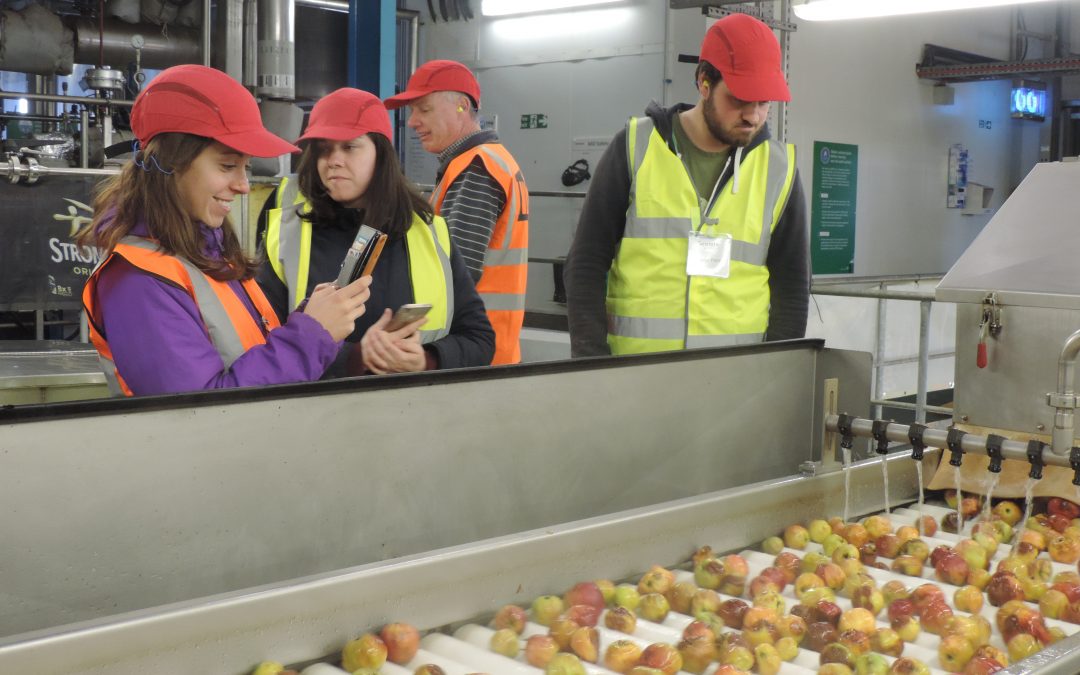
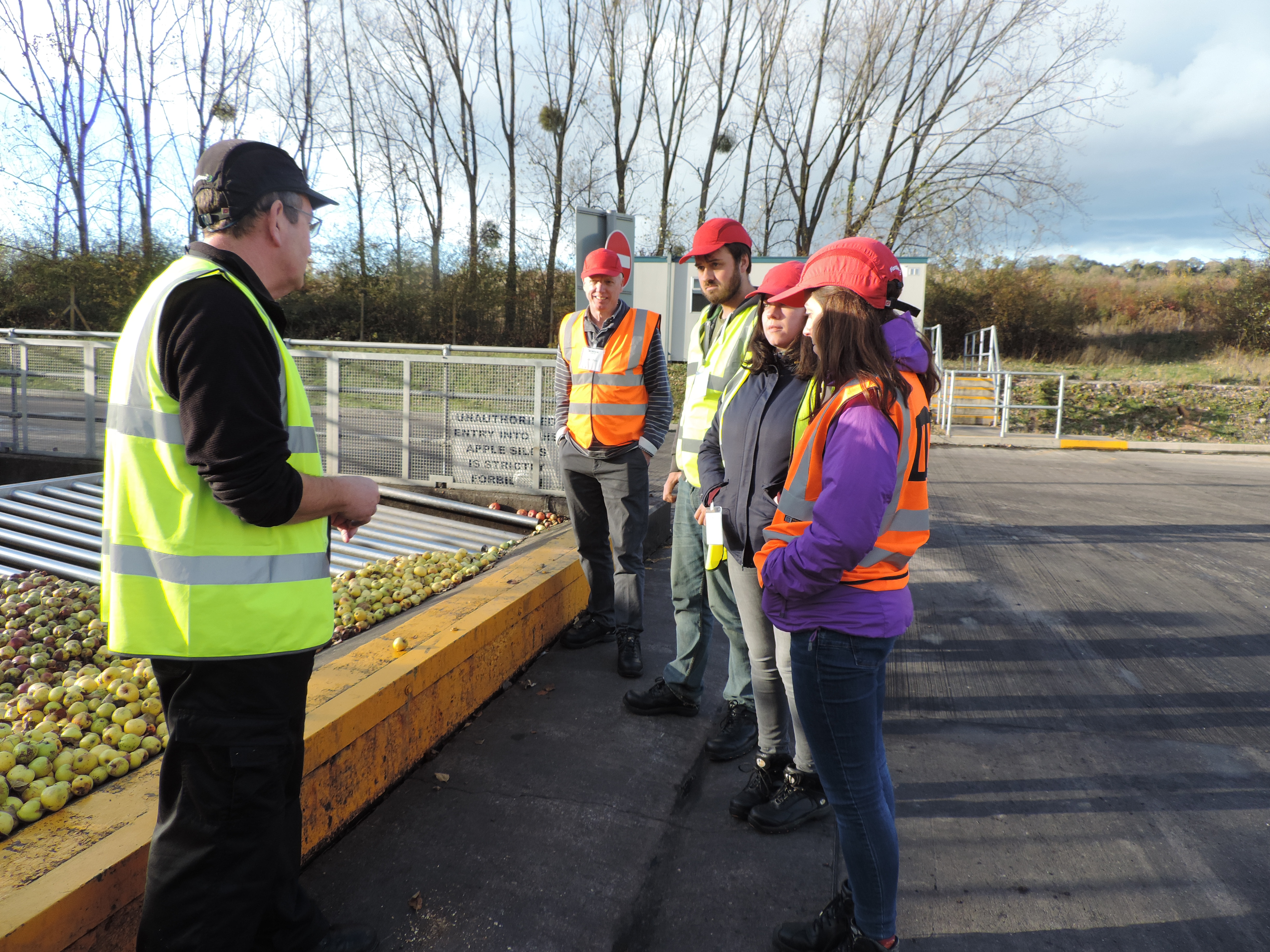
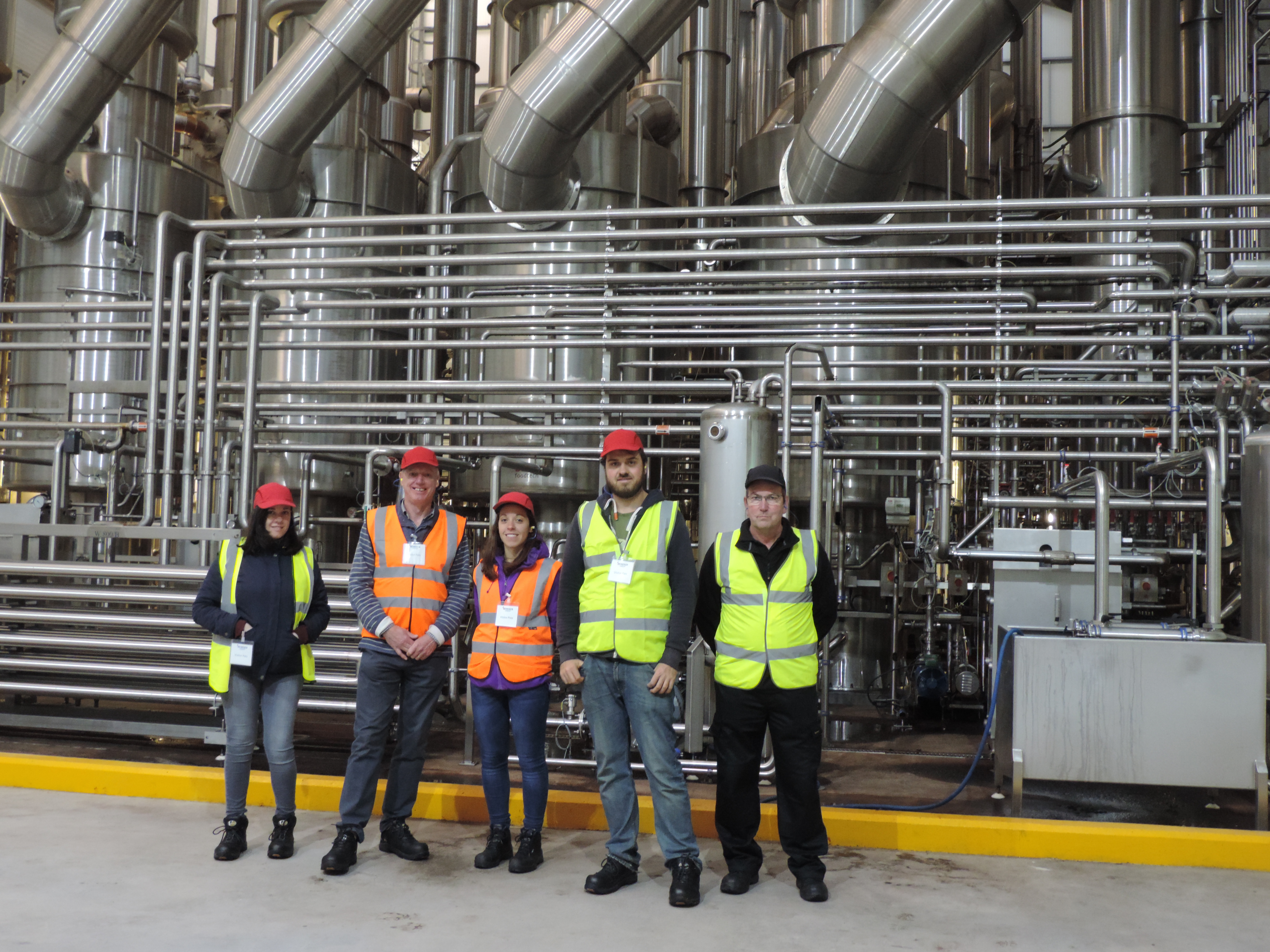
The 2017 cohort celebrated their first year with a trip to Herefordshire to learn more about cider making and to enjoy an evening sampling a range of ciders as well as trying some food matching. The trip included a visit to a range of Westons’ orchards, and a tour of the site which was then followed by a visit to Heineken’s apple mill in Ledbury. More field trips will be arranged as the PhDs progress.
During their first year they spend time familiarising themselves with their research topic and conduction preliminary experiments to understand the issues they may face e.g. tree samples dying, not being able to get woolly aphids to breed in the laboratory. The 2018 cohort is just starting that phase having begun their work in October 2018 and we are busy recruiting students for the 2019 selected topic.
For more information about the BBSRC Fruit Crop Research CTP please see http://www.ctp-fcr.org/

Apr 5, 2019
UK NERC funding has enabled an industrial partnership to investigate how microbial diversity in soil affects apple production. It is an important collaboration between cider and beer business Heineken, partner trade body the National Association of Cider Makers, and researchers in the University of Sheffield’s Department of Animal and Plant Sciences, led by Dr Duncan Cameron and Dr Karl Evans.
Find out more here
Apr 5, 2019
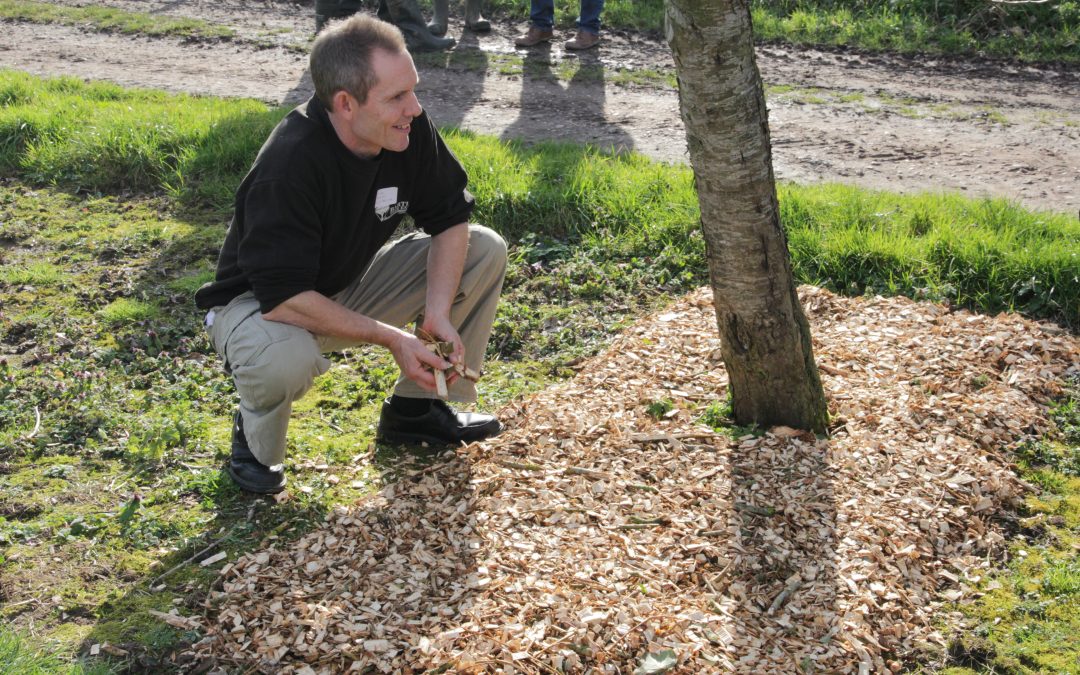
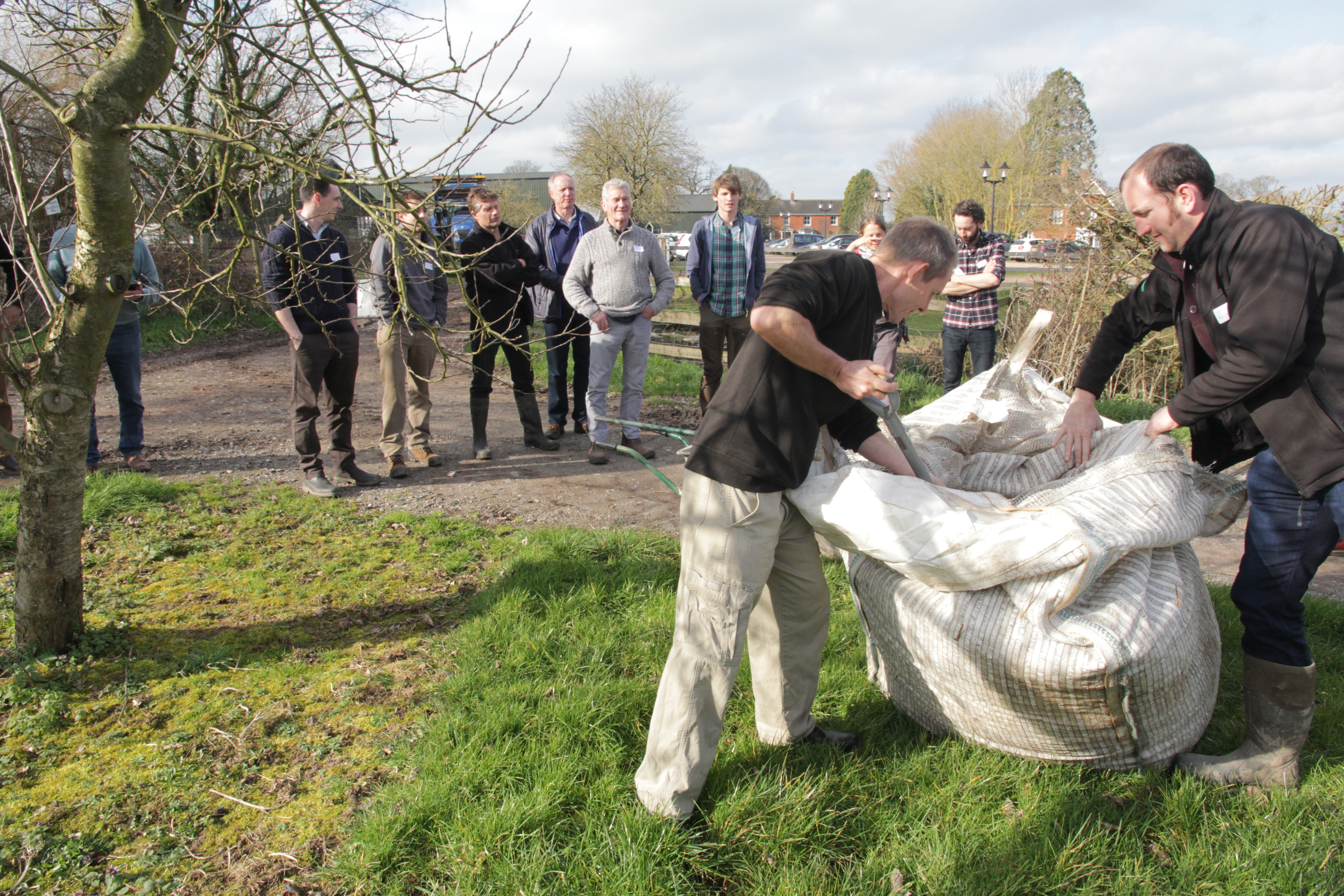
Investigating the efficacy of willow woodchip mulch as a control for apple scab.
With Field Lab funding made available, initially for analysis of the willow chip potency and then for field work, the team from Innovative Farmers, met with all of those taking part in the trial. The day included a demonstration, discussions around methodology , along with a review of different willow chip salicylic acid.
Special thanks to Sheppys Cider in Taunton for hosting the event.
Find out more about this trial
Feb 18, 2019
A recent article in the Times by:
Carol Lewis, February 9 2019
https://www.thetimes.co.uk/article/hmrc-gives-tax-boost-to-vineyard-owners-55l59sg6s
Vineyard owners are raising a glass to HM Revenue & Customs over new rules that allow them to pass on land where grapes — or apples for cider — are grown, free of inheritance tax.
In an update to its guidance notes on what constitutes agricultural use of land for inheritance tax purposes, the tax office has extended its definition of food to include fruit used to make wines and ciders. This means that the value of the land will be up to 100 per cent tax-free when left in an estate.
Richard Crane, the head of the farms and estates team at BKL, an accountancy firm, says: “This may be seen as a significant extension to tax-planning opportunities because it will become widely known that land for producing wine and cider is eligible for agricultural property relief. The relief is not limited to land within the UK but extends throughout the European Economic Area, which could be an attraction for investors looking to reduce their inheritance tax liabilities while having the pleasure of owning a vineyard.”
BKL says that although only grapes and apples for cider are mentioned specifically by HMRC, a case could be made for other fruit, such as pears used to make perry.
The British wine industry, which primarily produces sparkling white wines, is growing rapidly. It is being boosted by a warming climate that is hitting the wine-growing sweet spot of an average of 14C throughout the April to October growing season, and a higher profile for British products worldwide.
The amount of British land planted with vines has increased 150 per cent in the past ten years and tripled since 2000, according to Wine GB, the national association for the English and Welsh wine industry. Production is predicted to reach 40 million bottles by 2040.
The market in British wines began to take off in 2003 when Nyetimber, which owns vineyards in Sussex, Hampshire and Kent, beat some of the best known champagnes in taste tests. Since then French champagne houses Taittinger and Pommery have invested in British vineyards.
Ed Mansel Lewis, the head of the viticulture group at Strutt & Parker, an estate agency, says: “These two nods of approval have given the UK credibility as a new-world wine- producing region.”
Those keen to invest in the industry should be aware that it takes time for your assets to mature. If you planted your first vines this spring it wouldn’t be until 2023 that your vineyard would have a viable harvest and another two years before you had any wine to sell. The best vineyard land sells for between £13,000 and £15,000 an acre, compared with between £8,000 and £9,000 for arable land. The minimum plot size needed is ten acres.
Simon Robinson, the owner of Hattingley Valley winery and chairman of Wine GB, says he knows of good vine land trading for up to £20,000 an acre and that it can fetch 50 per cent to 75 per cent more than other farm land.
“A lot of vines are being planted in Britain, 2.5 million are expected over the next year. The issue is where are all those grapes going to go?,” Robinson says.
A vineyard owner could sell their grapes to the larger producers for roughly £2,000 a tonne depending on the quality (you can expect about three tonnes of grapes an acre). They could rent out the land, or try to make the wine themselves.
However, with harvests dependent on the weather there is the risk that they could earn nothing in a bad year.
In a good year, like last year, Lewis cautions that commercial wineries were so overloaded with fruit that they turned away grapes from smaller growers. Britain doesn’t have either a network of companies or co-operatives, such as in France, to help small-scale investors process their grapes.
Feb 4, 2019
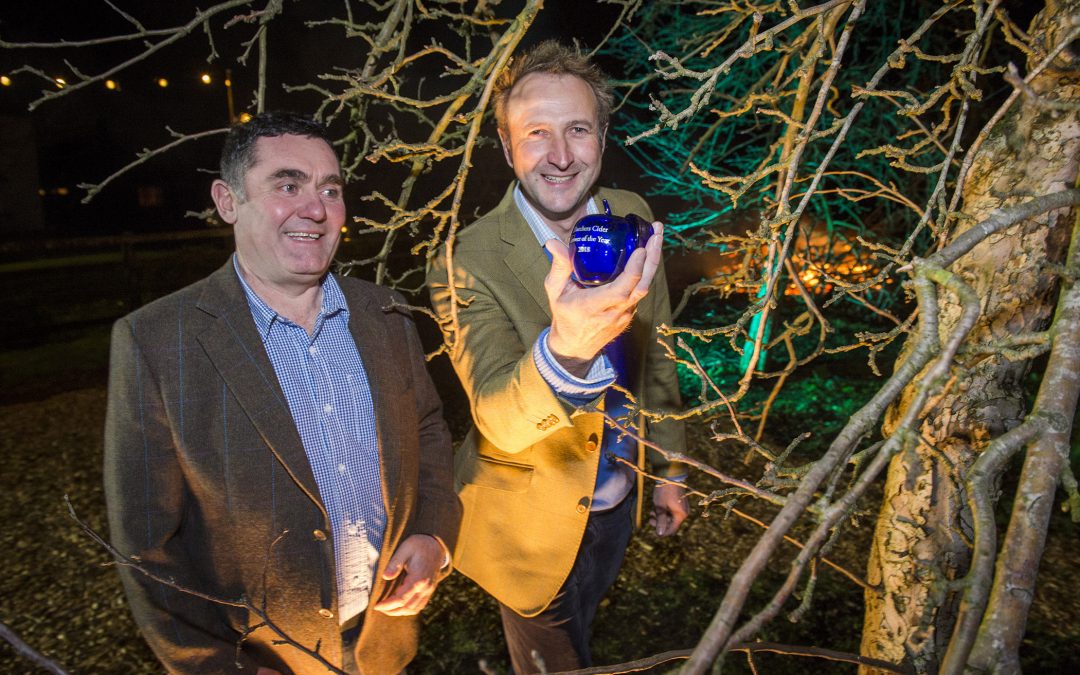
Richard Johnson (left), Thatchers Chief Cidermaker, with Richard Morgan-Jones, Thatchers’ Apple Grower of the Year
Richard Morgan-Jones, a Herefordshire based apple grower, has been given a special award and praised by Thatchers Cider for the exceptional quality of apples he produces.
Richard, who has followed in his father’s footsteps in growing and supplying apples to Thatchers, was presented with the Thatchers Apple Grower of the Year award at the cidermaker’s annual Wassail celebrations.
Richard supplies seven different apple varieties to Thatchers, both bittersweet and dessert – from Katy early in the season, through to Yarlington Mill as one of the last to be harvested.
Richard Johnson, chief cidermaker at Thatchers says, “Richard has put in an enormous amount of effort throughout the growing and harvest season to ensure his apples are the highest quality. In fact, this last harvest he supplied us with 101 trailer loads of fruit, which were all fantastic quality from September through to November. That is a real achievement over such a large harvest.
“Richard’s dedication to quality matches our own and truly reflects our ethos that the best cider starts in the orchard.”
Thatchers presents the award each year to recognise the commitment to quality that the growers have demonstrated when supplying fruit into the Thatchers cider mill.
Thatchers has over 500 acres of its own orchard in and around its cider mill at Myrtle Farm in Somerset, as well as a number of growers throughout the West Country.
“Climate and soil – as well as the expertise of the grower – all play their part in producing top quality apples for cidermaking,” continues Richard Johnson. “As a cidermaker we have our favourite apple varieties to suit our own style of ciders – Richard Morgan-Jones supplies us with Katy, which is pressed into our single variety cider of the same name; newer apple varieties such as Gilly and Jane, and much-loved bittersweet varieties Dabinett and Yarlington Mill.
“We test every batch of apples for quality that arrive at Myrtle Farm during harvest and reward our growers accordingly. This year Richard Morgan-Jones excelled, and we are very happy that he’s our Apple Grower of the Year.”