Mar 9, 2023
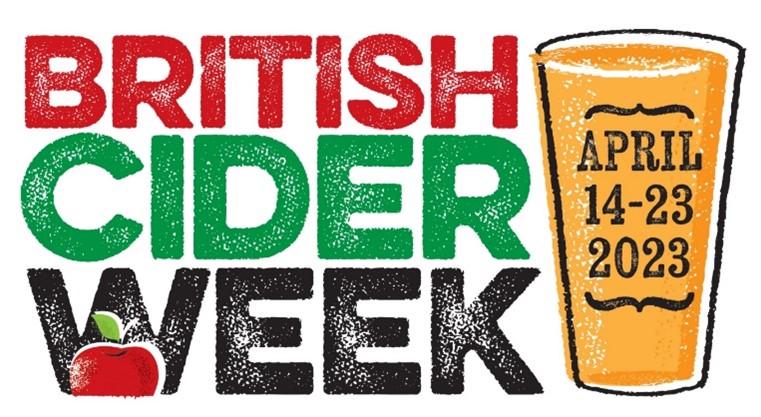
A week of cider celebration is going to be held in the first ever British Cider Week, running from 14th to 23rd April 2023.
Cider makers up and down the country will be taking part, from small micro-businesses to household names, from start-ups to those with many generations of heritage.
Martin Berkeley, founder of Pilton Cider, who is getting involved with the celebrations, says, “Spring is a fantastic time to be celebrating cider. When we’re all enjoying warmer weather, there’s no better time to enjoy the delights of this amazing drink.
“It’s the perfect opportunity for cider makers to come together and with one voice let the great British public know about the brilliant ciders that we produce in this country.”
The campaign will be encouraging consumers to explore the diversity of ciders produced in the UK and take part in the many events being organised by producers from the cider heartland of the West Country, the apple gardens of Kent, to urban cider works.
Mark Hopper, Public Affairs Director of the National Association of Cider Makers, endorsing the campaign, adds, “The cider industry has such a rich heritage. We have producers who span generations, as well as newer cider makers entering this exciting world for the first time.
“With such a diverse range of cider styles to explore, with our first British Cider Week we’re looking to encourage consumers to delve more into cider, perhaps by purchasing a pint in their local pub or restaurant, picking up a style they haven’t tried before with their weekly shop, or taking part in some of the events and activities that our producers are going to be organising throughout the week.”
Cider makers across the UK will be taking part in British Cider Week with many different events and activities such as tours, tastings and competitions. Producers participating include:
Pilton Cider, Sheppy’s Cider, Westons Cider, Thatchers Cider, Thistly Cross Cider, Ross Cider, Stones Cider, Olivers Cider and Perry, Somerset Cider Brandy, Little Pomona, Ross on Wye Cider and Greggs Pit Cider & Perry
Martin Berkeley continues, “This is a great opportunity for retailers and distributors, pubs and bars to showcase their cider range, perhaps by teaming up with their local producers to create some great consumer activities, such as cider festivals, special cider menus, or tastings.”
More information about events and those taking part can be found at https://britishciderweek.org.uk/
Anyone wishing to find out more can contact martin@piltoncider.com
Jan 15, 2023
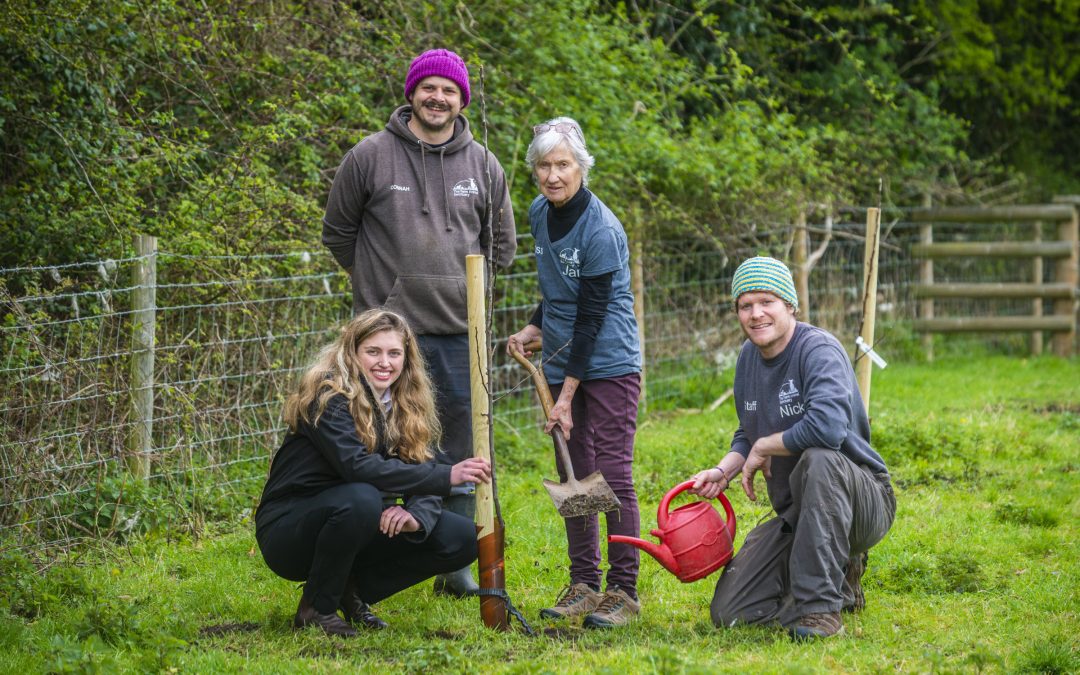
Eleanor Thatcher visited The Farm Animal Sanctuary in Evesham, who received a bundle of apple trees as part of the 2022 Thatchers Community Orchard Project. L to r, Eleanor Thatcher (Thatchers Cider), Connah Barr, Jan Cooper and Nick Jones from The Farm Animal Sanctuary.
Thatchers Cider launched its 2023 Community Orchard Project on the 4th January 2023.
In the third year of the project, the Somerset cider maker is looking to give away 500 apple trees to community groups up and down the country, encouraging planting in both urban and rural communities.
Groups can apply to be considered for a bundle of 5 apple trees each by visiting
www.thatcherscider.co.uk/thatchers-community-orchard
The simple application form asks for details of their community group, describing how the trees will be of benefit to them. Applications open on the 4th January and close on 3rd February 2023.
“Planting trees means so much to us as cider makers, and we want to spread our passion far and wide,” says fourth generation cider maker Martin Thatcher, who planted his first apple tree aged five.
“We all know that planting trees helps the environment but being out in nature is so good for well-being too. Over the last two years our project has been able to help residential groups rewild their communities and help care homes create peaceful havens for residents.
“We’re looking forward to hearing from groups again in 2023 and help spread our love of apple trees far and wide.”
In 2022, Thatchers gave away 350 apple trees, to over 50 organisations across the UK, doubling the number it was able to support in the project’s first year.

May 26, 2022
UK cider industry leaders gathered in Westminster on 24 May to recognise the MPs who champion cider companies, the people who work for them, the farmers growing cider apples and the rural communities that benefit from the Great British cider industry.
The event organised by the National Association of Cider Makers (NACM), was hosted by Sir Bill Wiggin MP, President of the All-Party Parliamentary Cider Group (APPCG).
MPs from cider growing areas including the West Midlands and South West were recognised for their long standing commitment to the industry. Cider Makers from across the regions presented MPs with a personalised gift box including a selection of British ciders and a commemorative cider glass.
Speaking at the event, James Crampton, Chair of the NACM commented that “the MPs who were recognised this evening go above and beyond to ensure that our small, rural industry is recognised for its great contribution to the UK and to British culture. It was great to finally gather people together after a gap of more than two years, to say thank you for their support and for making sure that cider making and cider apple growing remain a priority for the government. The continued support of these MPs is critical to sustain the livelihoods of the 11,500 people that rely on the industry”.
Sir Bill Wiggin MP, Member of Parliament for North Herefordshire, said, “it is always a delight to represent and promote Great British cider makers and the fantastic ciders that they produce.
“Cider making contributes to our rural counties including Herefordshire and as the UK are global market leaders we should be proud to support this fantastic British success story.”
Members of Parliament Recognised
Sir Bill Wiggin MP, North Herefordshire
Ian Liddell-Grainger MP, Bridgwater & West Somerset
Rt Hon Jesse Norman MP, Hereford & South Herefordshire
Harriett Baldwin MP, West Worcestershire
Rt Hon Mel Stride MP, Central Devon
Rebecca Pow MP, Taunton Deane
John Penrose MP, Weston-super-Mare
Cider Makers presenting Awards
James Crampton, Chair of the NACM and Corporate Affairs Director at Heineken UK
Helen Thomas, Managing Director at Westons Cider
Martin Thatcher, Managing Director at Thatchers Cider
Barny Butterfield, Owner at Sandford Orchards
Geoff Thompson and his daughter Eliza Thompson, Owner at Oldfields Cider
David and Louisa Sheppy, Managing Director at Sheppy’s Cider

Mar 22, 2022
The specially created wildlife area, which will extend to approximately an acre in size, will run alongside the popular Strawberry Line cycle and footpath in Sandford, with family-run cider maker Thatchers hoping it will make a real contribution to the local environment and the biodiversity of the area.

Emma Pyle, Thatchers Cider, helps plant wildflowers in a new conservation area being planned by the Somerset Cider Maker
Two areas of coppice woodland will border a central grassland plateau. Planting of 169 trees and hedges includes native species such as hawthorn and hazel, English oak and field maple, together with more planting of grasses and nectar-rich wildflowers. This planting will help create sheltered micro-habitats, and will aid the important retention of a dark corridor for bats and other wildlife.
A special group of ten trees along The Strawberry Line has been planted and dedicated to the Queens Green Canopy campaign, celebrating the Platinum Jubilee in 2022.
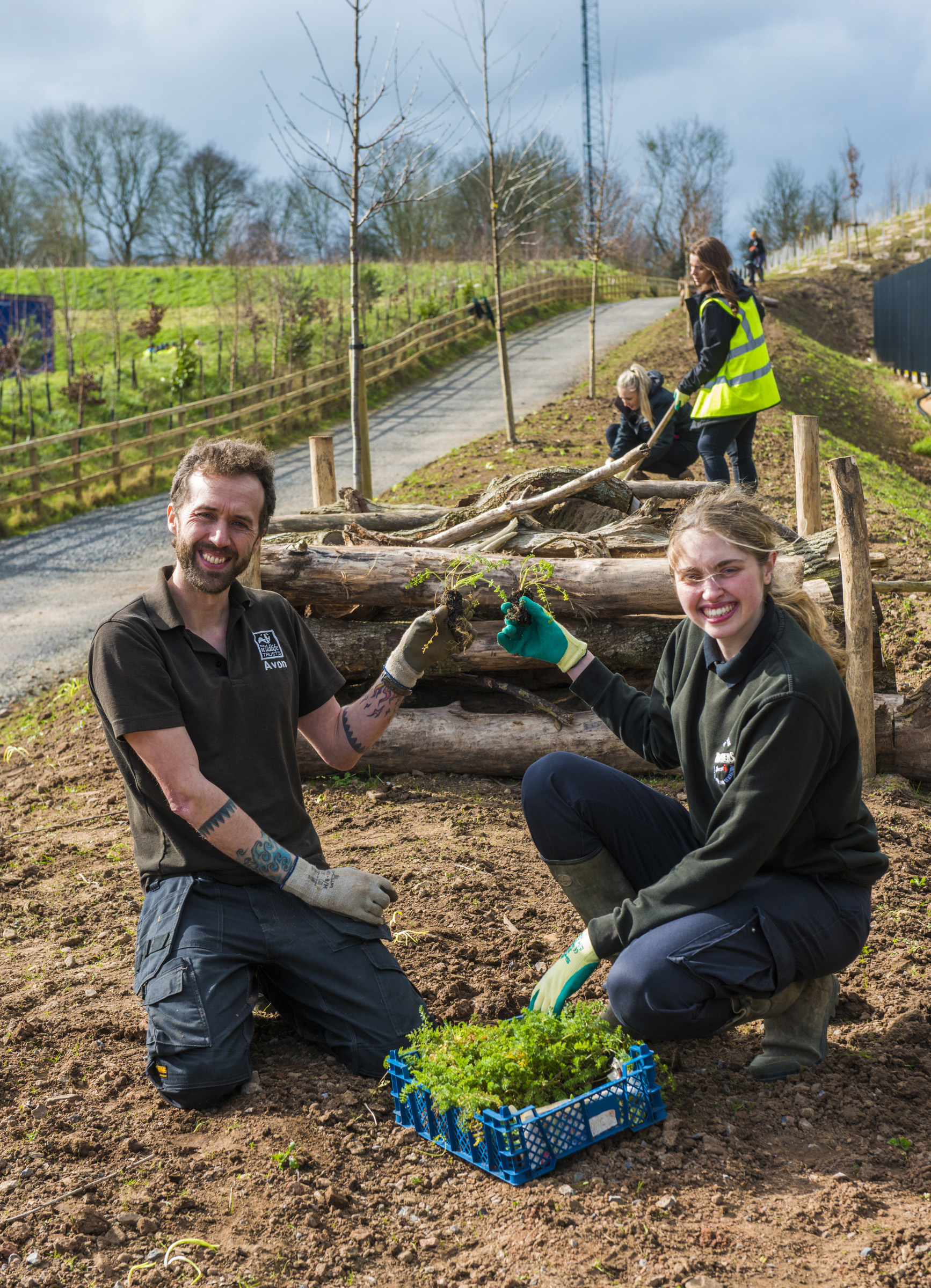
Eleanor Thatcher, right, and Andy Jones, Avon Wildlife Trust, plant wildflowers in a new conservation area being planned by Somerset cider maker Thatchers
With its 500 acres of Somerset apple orchard, Thatchers is already home to a diverse habitat, and at Myrtle Farm has recorded 13 species of bat, as well as birds which are on the BOCC (Birds of Conservation Concern) Red and Amber lists, including house sparrow and redwing, grey wagtail and mistle thrush. It is hoped that the new conservation area will become a familiar home to many of these species, with the trees and plants selected to create a protected and foraging-rich haven.
“It’s important to us to maintain the biodiversity of our site here at Myrtle Farm,” says Gary Delafield, Operations Director at Thatchers. “As a cider maker rooted in the rural community, we’ve always been surrounded by trees and farmland, and recognise the role that a biodiverse environment plays. Myrtle Farm is already a very vibrant place for wildlife, and with this new conservation area, we’ll be increasing its biodiversity by over 85%.”
The habitat is expected provide a picturesque and interesting stop off point along the Strawberry Line, which is designated as a public footpath running alongside Myrtle Farm.
Thatchers has been working closely with the Avon Wildlife Trust in creating the area, together with arboricultural consultancy Cambium.
Fifth generation cider maker Eleanor Thatcher has been closely involved in the planning of the conservation area.
“Myrtle Farm is where I’ve grown up, and I’ve been used to seeing animals such as deer and hare in the orchards from an early age. It’s so important for us to encourage wildlife at Myrtle Farm,” she says. “This new conservation area will bring the wildlife right into the heart of Myrtle Farm, and we can’t wait to see which visitors will be the first to arrive in the Spring.”
Thatchers and the Avon Wildlife Trust will be erecting information boards alongside the conservation area, featuring more detail about the planting and resident wildlife.
Eleanor concludes, “We are no strangers to planting trees – in fact over the last decade Thatchers has planted some 158,000 apple trees in our orchards. And in 2022 we’re continuing to donate hundreds of apple trees to organisations and charities taking part in our Community Orchard Project. Our orchards are already havens for wildlife, but this conservation area is extra special, creating a new protected habitat for birds, animals and insects here at Myrtle Farm.”

Nov 3, 2021
With the largest and most diverse collection of apples used in cider making under its care, Somerset cider maker Thatchers has been partnering with the University of Bristol in a ground-breaking project that is using DNA fingerprinting techniques to identify apple tree varieties.
With many old and heritage varieties of apple trees beginning to disappear, the project is using genotyping – a process that compares DNA to find the differences in genetic make-up – to identify different varieties of cider apples.

Prof Keith Edwards, University of Bristol, left, with Chris Muntz-Torres, Thatchers Cider, collecting leaf samples for a ground breaking project that uses DNA fingerprinting techniques to identify apple tree varieties.
Led by Professor Keith Edwards from the School of Biological Sciences and post-graduate student Alex Graham [pictured main photo], scientists from the university visited Thatchers’ Exhibition Orchard to gather leaf samples for genotyping and thus identification. The biggest collection of apples for cider making in the country, Thatchers’ Exhibition Orchard contains hundreds of different varieties of apple tree, many of which were saved from the Long Ashton Research Station when cider research stopped in 1985. The researchers have also been out to other Thatchers’ orchards to gather samples, helping them create the largest database of apple tree fingerprints in the world, with over 2,500 genotypes present.
Chris Muntz-Torres, Thatchers Farm Manager has been involved in the project since its inception. “This is such a fantastic piece of research which will help us understand even more about the trees in our orchards. As with any research, you’re not always sure what’s going to be found. Although we think we know about the trees in our Exhibition Orchard with detailed plans we’ve compiled over the years as new trees have been planted, you never know, the research may identify variety that’s been lost and now rediscovered. That would be such an exciting find!
“By using the DNA technique to tell us more about the pedigree of each variety in our Exhibition orchard, we hope to be able to start creating new varieties of apple for cider making with the characteristics that we love as cider makers.”
Professor Edwards says, “By taking a leaf and fingerprinting it, we are in effect creating a barcode for that tree. And from that we are able to produce a reliable process for easy identification in the future.
“By visiting the UK’s most influential orchards, such as at Brogdale, The National Botanic Garden of Wales, and the Thatchers Exhibition Orchard, we’re creating a database that will be a valuable resource like no other for all cider makers.”
The researchers also asked local communities to send in leaf samples from unidentified apple trees in their gardens or allotments to help in the project.
“This is a 20-30 year process,” adds Alex Graham, who has collected some 2,500 leaf samples for the research. “The results will tell us what varieties we have now and the pedigree of each, assisting with future breeding of new varieties, perhaps high in tannin, or disease resistant. We need to make sure this knowledge is secure for the future of cider making.”
Family cider maker Thatchers Cider has over 500 acres of its own orchard in Somerset. By choosing its apple varieties carefully, and ensuring an exceptionally high standard of fruit grown in its orchards, Thatchers cider makers have created a distinctive style for its products, helping it grow to be the largest independently owned cider maker in the UK.
www.thatcherscider.co.uk


